Biomimetic Dentistry · Lafayette, ColoradoMore of your tooth. More thought in its care.
Your natural tooth is worth protecting. Biomimetic dentistry draws on modern adhesive techniques and the way natural teeth work to repair damage while preserving healthy structure. At Rooted, we take the time to plan for your tooth’s comfort, function, and long-term health.
Planned for our February 2027 opening. Treatment availability and suitability will be confirmed before scheduling.
Modern restorative care, built around your tooth.
A natural tooth combines a hard enamel shell with more flexible dentin underneath. Biomimetic care takes those different roles into account when selecting materials, planning the repair, and managing the forces your tooth experiences each day.
For a suitable tooth, a bonded onlay can protect weakened areas while keeping healthy surfaces that a full crown would cover. We look closely at that opportunity before recommending more extensive treatment, with a design tailored to the tooth in front of us.
Understanding the shape of a repair
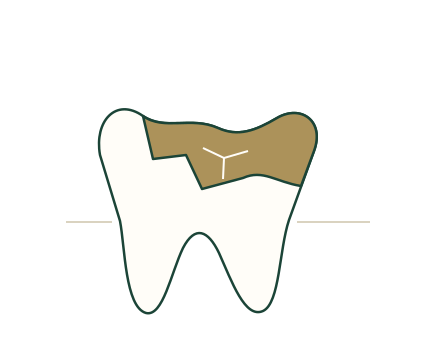
An onlay
Covers the areas that need repair, including one or more chewing cusps.
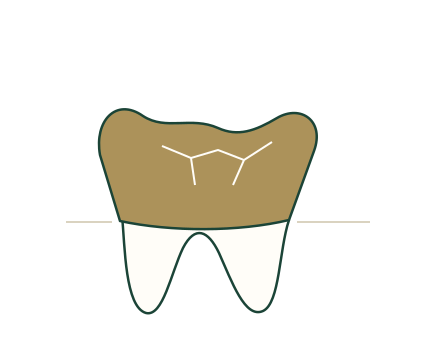
A crown
Covers the chewing surface and surrounds the visible portion of the tooth.
A longer view of your tooth’s health.
Over a lifetime, a filling or crown may need repair or replacement. Each larger repair can leave less natural tooth behind and make the next treatment more complex. This is often called the restorative cycle. Understanding it gives us a reason to make thoughtful, conservative choices early.
Our aim is to slow that cycle. By preserving healthy structure, protecting the living tissue inside the tooth, and taking care with the bond and bite, we work toward lasting comfort, less sensitivity, and less need for aggressive retreatment. The goal is to help your natural tooth stay healthy and useful for as long as possible.
The details behind a thoughtful repair.
Careful isolation and bonding are central to this approach. In selected cases, we use immediate dentin sealing: applying a protective adhesive layer to freshly prepared dentin before the final restoration is placed. This supports the bonding process and protects the prepared surface.
We also use deep margin elevation in selected cases. A carefully bonded material raises a deeply positioned restoration edge to a more accessible level for finishing and bonding. Gum health, the depth of the damage, and our ability to keep the area clean and dry guide the decision. These extra steps help us tailor the repair to your tooth.
See your options. Feel confident in your plan.
We will show you what we see with photographs and scans, explain which areas need care, and talk through what each option can preserve. You should leave that conversation knowing how the recommendation connects to your comfort and the future of your tooth.
If you have been told you need a crown or a larger treatment plan and would like another perspective, you are welcome here. Bring your questions and any previous records. We will take a fresh look, listen to what matters to you, and help you find a path forward you understand.
A few helpful answers.
Does biomimetic dentistry mean never getting a crown?
The priority is preserving your tooth thoughtfully. When a bonded filling or onlay can provide the protection it needs, we consider that more conservative option. Some teeth still benefit from a crown or root canal treatment. We will explain which approach gives your particular tooth the best opportunity for lasting function.
Will a biomimetic restoration last longer?
Long-term tooth health is exactly what we plan for. Preserving healthy structure and paying close attention to the seal, bond, and bite can support a durable restoration while keeping future treatment options open. Your tooth’s starting condition, bite, and home care still shape its lifespan. Our focus is a comfortable repair today and the best foundation we can create for the years ahead.
Is this approach based on research?
Yes. Our approach draws on research in adhesive dentistry, restorative materials, and tooth biomechanics. Bonded partial restorations and techniques such as immediate dentin sealing have been studied in laboratory and clinical settings. Dr. Hofsess combines that evidence with an examination of your tooth to choose the details that make sense for your care.
General education, not a diagnosis or an individual treatment recommendation. An examination is needed to discuss your options.
Further reading: Clinical trial: bonded partial ceramic restorations · Research: immediate dentin sealing and bonding · Clinical study: deep margin elevation
What the process can look like
See what can be saved
Assess the damage, healthy structure, nerve health, and bite.
Personalize the repair
Choose the coverage, materials, and bonding approach for your tooth.
Plan for the years ahead
Support a comfortable bite and a practical routine for long-term care.

A new beginning in Lafayette
Good care starts with a connection.
Questions about Rooted or planning your first visit? Email the office. We’d be glad to hear from you as we prepare to open.