
Dental Implants · Lafayette, ColoradoA missing tooth. A considered solution.
Replacing a tooth means thinking about more than the visible crown. Bone, gums, the bite, and the position of neighboring teeth all shape the plan.
- DDS, University of Detroit Mercy, 2020
- 300+ hours of implant continuing education
- California Implant Institute fellowship
Planned for our February 2027 opening. Treatment availability and suitability will be confirmed before scheduling.
Dental implants: three parts, one coordinated plan.
An implant replaces a tooth root. A connector, called an abutment, joins it to a crown or another restoration. The position of the future tooth helps guide where an implant may be placed.
We begin with your medical and dental history, gum health, and the available bone. At Rooted, every planned implant site is evaluated with CBCT imaging. Dr. Hofsess will explain whether an implant is a good fit for you and walk you through the alternatives when another approach would serve you better.
How an implant-supported tooth fits together
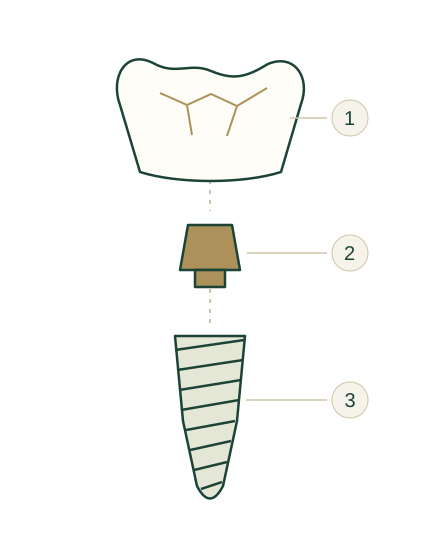
The crown
The visible replacement tooth, shaped to work with your smile and bite.
The abutment
The connection between the crown and the implant.
The implant
The foundation placed in the jawbone to support the replacement tooth.
Plan the tooth before the surgery.
We combine a digital scan with CBCT imaging to plan the future tooth in three dimensions, including its position and the chewing forces it will need to handle. That design guides where the implant should sit in your jaw, together with the available bone and nearby anatomy.
If more bone is needed to support the ideal position, we will include grafting in the plan. We often use a surgical guide to help place the implant accurately in three dimensions, carrying the design from the screen into your care.
If your jaw has lost a great deal of bone or you need more advanced grafting, we may work with a local specialist for the surgical part. We will explain who is involved and keep the plan for your final tooth coordinated from the start.
Extraction and implant placement in one visit.
Many times, an implant can be placed at the same appointment as the tooth is removed. When the site is suitable, combining those steps means one surgical procedure for extraction and implant placement, rather than two separate visits.
Bone, infection, the condition of the socket, and the stability we can achieve all help determine the timing. If significant grafting is needed first, allowing the site to heal can give us a better foundation for the planned implant.
Healing is part of the treatment.
When a tooth needs to be removed and the site grafted before implant placement, we often allow about three to four months for that first stage of healing. After the implant is placed, we usually allow another three to six months before assessing readiness and beginning the final crown. Your healing and the type of grafting can change that schedule.
In especially favorable cases, often where a missing front tooth would show, excellent implant stability may let us fit a temporary abutment and crown on the day of surgery. That can give you a natural-looking temporary tooth while the implant heals. We will explain how to protect it from chewing forces during that time.
A same-day temporary is a step toward the final result. After healing, often around three to six months later, we check the implant and plan the permanent crown to replace it. When an immediate temporary crown is not suitable, we will discuss other ways to manage the space during healing.
Understand the alternatives and the costs.
Depending on the situation, alternatives may include a bridge, a removable replacement, or monitoring the space. When your natural tooth can be predictably treated, keeping it also deserves a place in the conversation.
Before treatment, we will provide a written estimate covering the planned implant, abutment, final crown, imaging, any necessary grafting, and a temporary restoration when included. You will see the expected stages and costs together.
We will explain when payment is due and which payment arrangements are available, including whether payments can follow the treatment stages. Financing arrangements are still being finalized; once available, we can help you explore eligibility if you would prefer to pay over time.
A few helpful answers.
Can I get an implant and a tooth on the same day?
An implant can often be placed when a tooth is removed. A same-day temporary tooth is also possible in especially favorable cases, when the implant has excellent stability and the bite can protect it during healing. These are two separate decisions. If the site needs significant grafting first, implant placement may happen at a later appointment. Ask Dr. Hofsess about your situation: he will use your imaging, examination, and findings at surgery to explain the plan. The final crown follows healing.
Will I need a bone graft?
Some patients do; others do not. The available bone and the planned implant position guide the recommendation.
Are implants permanent?
They are intended as a long-term tooth replacement, but they are not maintenance-free or guaranteed. Gum and bone health, cleaning, and follow-up remain important.
General education, not a diagnosis or an individual treatment recommendation. An examination is needed to discuss your options.
Further reading: American Dental Association: Dental implants
What the process can look like
Assess
Discuss the missing tooth, medical history, bone, and tissue.
Plan & heal
Coordinate any preparatory care, placement, and healing period.
Restore & maintain
Fit the final tooth and establish long-term follow-up.

A new beginning in Lafayette
Good care starts with a connection.
Questions about Rooted or planning your first visit? Email the office. We’d be glad to hear from you as we prepare to open.